


Piano Pestilence-Borer, Moth & Mould
They start slowly and silently, in the darkest corners on a piano, well and truly hidden from plain sight. From just one tiny spot, they begin to multiply, using the pianos timber and felts as an energy source to fuel their growth. These are the Hidden Piano Pestilences of Borer, Moth and Mould and we are going to spend some time on each as they can be easily overlooked by the unsuspecting buyer on Marketplace, Gumtree et al. Mike gets a lot of calls to tune a piano that the owner just obtained "Free", only to find one of these 3 common issues renders the piano requiring a lot of work to repair it, at best, or untuneable at worst.
The damage they can inflict on a piano can be a shock find when looking at the piano from the outside, you would never guess there was anything wrong with it. It's a bit like buying a nice looking car only to find there is cracks or rust in the engine block or chassis that you can't see.
MOTH -Tineola bisselliella
Beware Tineola bisselliella - aka the Wool Moth! It lays its eggs in clusters (of up to 200!) in dark and undisturbed areas. When the larvae hatch, they start eating animal fibres and dust. Wool moths LOVE to eat all the accumulated dust, wool and felt parts of pianos that make up the action, preferring"dirty" fabric.

The most favourable conditions for wool moths to thrive and multiply is at temperatures around 24 degrees C, and 70% humidity and so airconditioned Melbourne houses are highly conducive to the moths lifecycle.

Here is a great a example of the unseen damage a wool moth can inflict- "Brenna" Beale which we collected from a home in Melbourne's north:


From the Outside, it looks to be in very nice condition...

However, under the lid reveals a very different story on the inside.....
Infestation is a reasonably common occurrence in Australia, although usually not quite to this extent. Often the presence of current moth and historical moth damage is much more subtle and has to be looked for very carefully. Underneath the keyboard, check the felts are complete and do not have tiny holes in them. Another clue is wool dust at the ends of the keys, or underneath the keyboard or action. The cost of inaction, is effectively a new action -including refelting, new hammers etc which can cost upwards of a thousand dollars to fix. If you are not a confident wool moth sleuth, then we would recommend only buy pianos that have been professionally certified as structurally sound and pest-free!
BORER-Anobium punctatum

Not as commonly, pianos are sometimes unknowingly infested with current or previous "borer" -which is the wood-eating larva of beetle species -Anobium punctatum. The eggs are lain in cracks in the wood, or previous exit holes. The larvae hatch after 3 weeks, but then spend the next 3-4 years (!) boring random holes through timber parts. They prefer softwoods (like spruce/oregon etc) to hardwood,and any areas of moisture in a seasoned sapwood is particularly susceptible. After 3 or so years, the larvae is finally ready to pupate, and digs a small space just under the wood surface. Eight weeks later, the adult beetle breaks through the surface, making a roughly 1mm exit hole and spilling dust (a powdery substance called frass). This is often the first visible sign of an infestation, and is unfortunately too late for the timber. After they emerge, the adults do not feed; they find mates, reproduce, and die.
Like wool moth, the borer can transfer from a piano into consuming other areas in your home - for borer, it may be surrounding timbers (think floors, wooden furniture). Here is a (previous) borer infestation we found in a beautiful looking Thurmer piano that was collected from an old house in Melbourne's south eastern suburbs.

Piano Feet/Leg
This is a common place for borer entering from the ground
Softwood Dietary Preference

In this case, the different timber molding was tastier for the borer to eat!

Backposts Riddled
The harder to see back of the piano is made of delicious spruce or oregon posts

A Word on TERMITES

Don't think that termites will turn their noses up at piano timber. Melbourne and Victoria has 5 major types of termites that cause structural damage. We don't know the name of the one that caused the damage below to a piano foot (yes it was a piano foot once), however they sure left a trail of complete destruction. Again termites prefer dark humid envrionments eating the inner soft wood and leaving a thin layer of outer protective timber to hide and maintain this.

MOULD-Aspergillus, Cladosporium, and Stachybotrys Atra
Often the scariest of presentations/finds inside a piano, mould is actually a fungus that needs nutrients and water to grow. It actually plays an important role in the natural role as a decomposer of organic material, eg wood,and is useful in manufacturing of many items from pharmaceuticals to fertilisers. Mould needs a humid, warm and dark environment with biodegradable organic material to eat.

These conditions are usually met in a piano which has sustained water damage and been stored under a cover somewhere, or been housed in a humid environment for a period of time. The mould then reproduces through spores which can travel via air, water, or animals (such as cockroaches and mice).

The impacts of mould on wood is to undermine it's structural integrity, leading to decay, weakening, and rot if left unchecked. The result is costly repairs and replacements, emphasising the need for professional inspection prior to piano purchase and ongoing proper maintenance of existing pianos. Here are some examples of piano mould that we have come across:
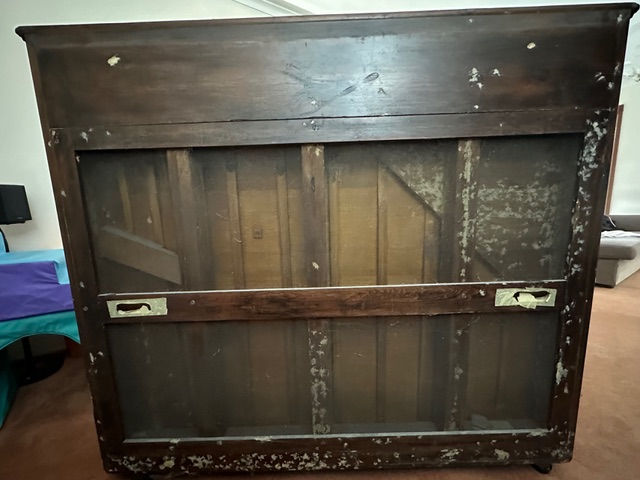
In this case, the piano was not worth saving, and unfortunately was disposed of in landfill.
Easy Second Hand Piano Shopping

If you want peace of mind when searching for a second hand piano, get in touch with us. We currently have 24 pianos in stock ranging from small cottage style, to modern Yamaha studio style to Victorian era grand pianos.
All are guaranteed to be structurally sound,thoroughly cleaned, tuned to A440, and of course, pestilence damage free! Check out our range here: Piano Catalogue


Comments